M.MULAWLAB
COMPUTATIONAL GENOMICS · BIOMEDICAL AI

Making complex
biology computable.

We develop generalizable machine-learning frameworks and integrate single-cell, multimodal and clinical data to understand how disease begins, evolves and responds to treatment.

PRINCIPAL INVESTIGATORProf. Medhanie A. Mulaw
AFFILIATIONUlm University · Germany
FROM MOLECULAR SIGNALS TO MECHANISTIC INSIGHT
● SINGLE-CELL● MULTI-OMICS● GENERALIZABLE AI
01 / RESEARCHSCROLL TO EXPLORE ↓ULM · GERMANY
THE BIG PICTURE — 01

From data-rich biology
to predictive discovery.

Biomedical data are growing in scale and complexity. Yet patient-to-patient variation, technical differences between cohorts and platforms, and disconnected molecular layers can obscure the biology we want to understand.

At Mulaw Lab, we build computational methods that learn disease-relevant signals while accounting for biological and technical variation. We connect molecular resolution with biological mechanism and, ultimately, clinical relevance.

How we work ↗
RESEARCH PROGRAM — 02

Questions that
move biology forward.

Our work spans disease systems, united by a shared ambition: understand cellular states, molecular interactions and clonal dynamics across biological scales.

01 / AGING & HEMATOPOIESIS

How do stem cells
age — and recover?

We investigate cell-intrinsic ageing trajectories, stem-cell heterogeneity, clonal hematopoiesis and the influence of the bone-marrow niche on stem-cell function and rejuvenation.

HSC biologyClonal dynamicsNiche interactions
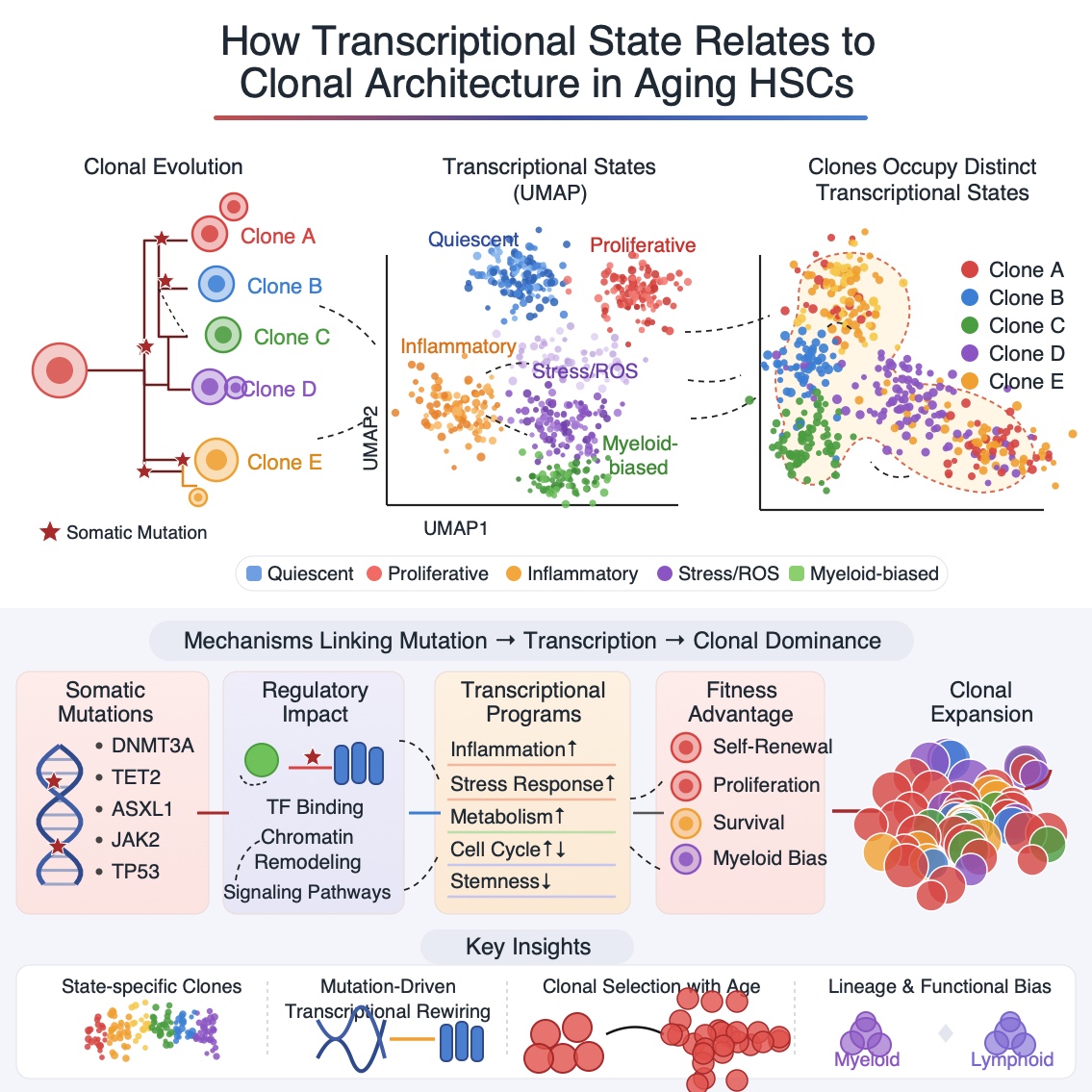
Conceptual illustration of how transcriptional states relate to clonal architecture in ageing haematopoietic stem cells
Figure 1. Conceptual illustration of how transcriptional states relate to clonal architecture in ageing haematopoietic stem cells.
02 / CANCER EVOLUTION

How does cancer
adapt and progress?

We model tumour heterogeneity, clonal evolution and communication between malignant cells and their microenvironment, including leukemia and solid tumours.

AMLTP53Organoids
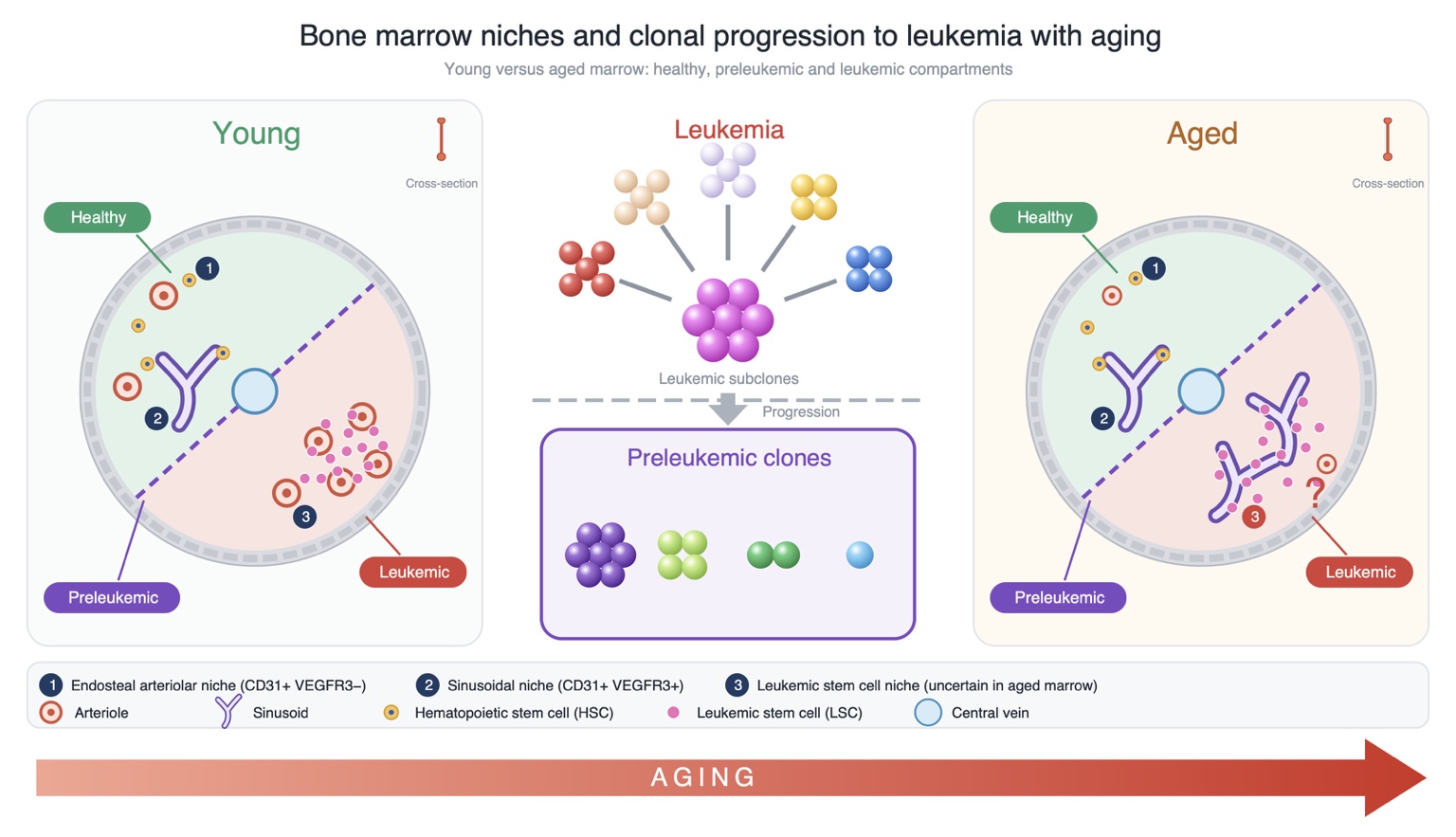
Schematic of age-associated changes in healthy, preleukemic and leukemic stem-cell niches and clonal progression
Figure 2. Schematic of age-associated changes in healthy, preleukemic and leukemic stem-cell niches and clonal progression.
03 / NEURODEGENERATION

Can molecular data
reveal disease endotypes?

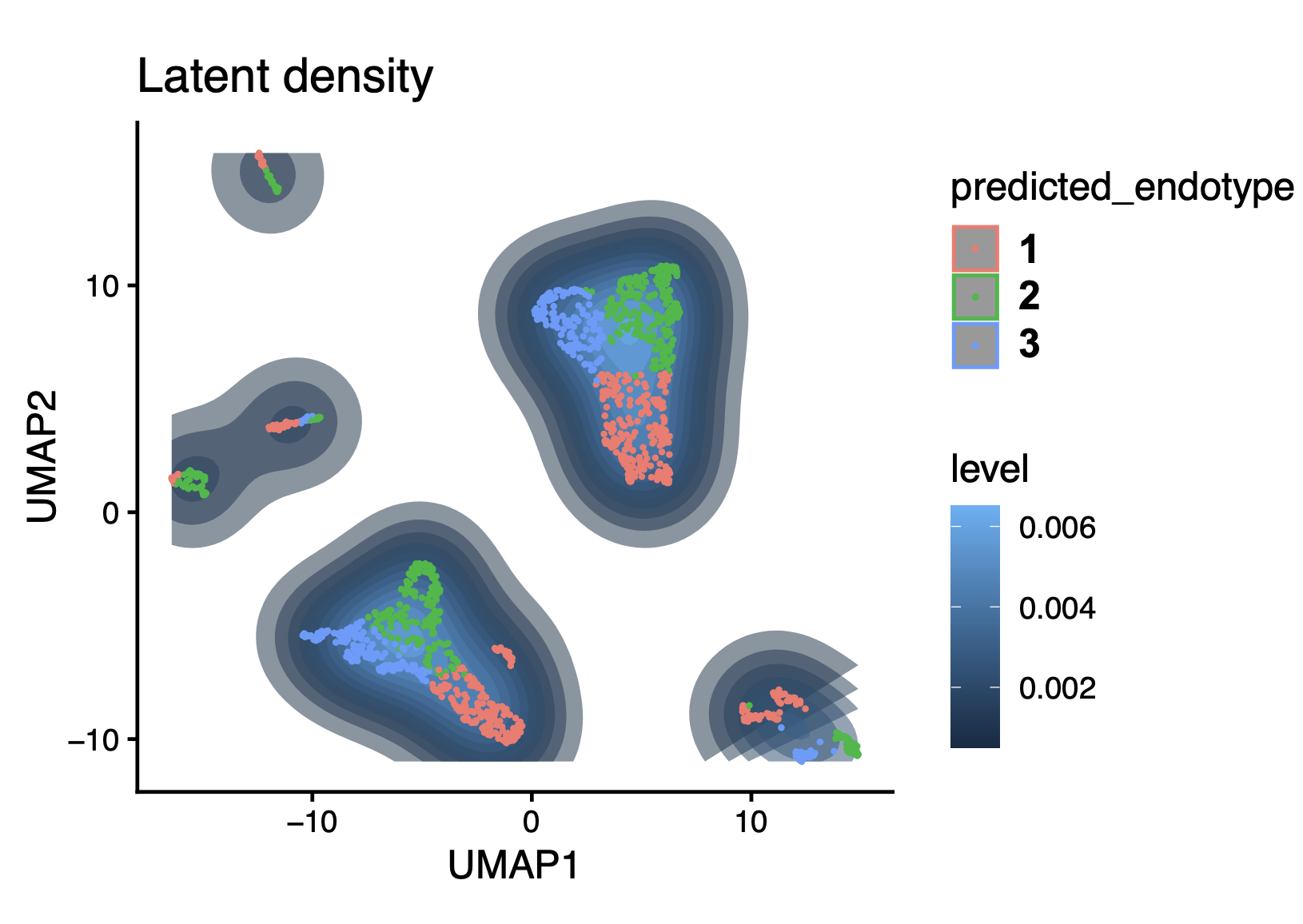
We integrate single-cell, bulk and clinical data to identify robust ALS-associated molecular signatures, disease endotypes and candidate therapeutic vulnerabilities.

ALSEndotypingBiomarkers
UMAP latent-density plot showing three predicted ALS molecular endotypes
Figure 3. UMAP latent-density plot showing three predicted ALS molecular endotypes.
04 / COMPUTATIONAL METHODS

Can AI generalize
across patients and studies?

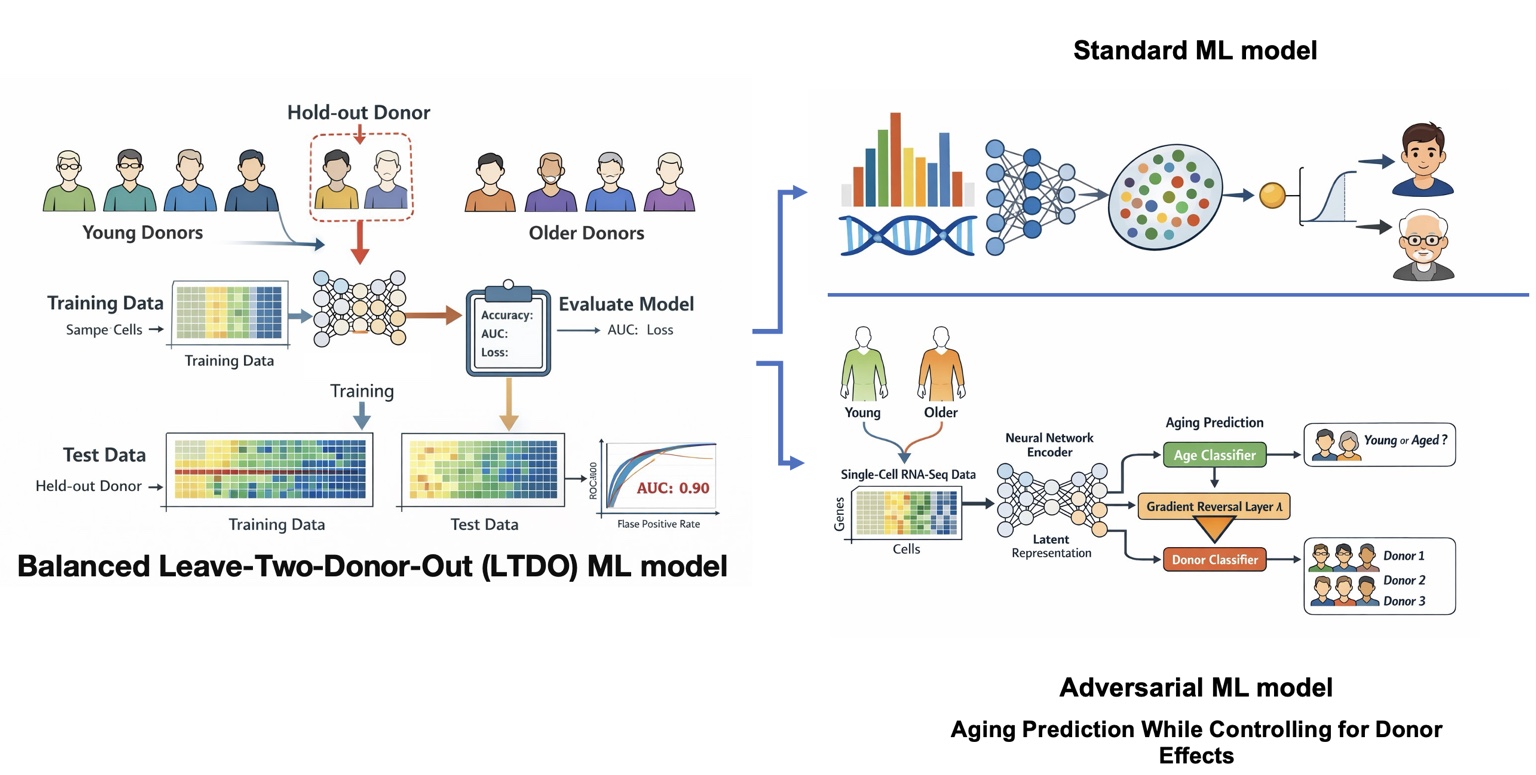
We develop donor-aware and dataset-aware machine-learning frameworks that separate disease biology from cohort and platform effects, with rigorous external validation.

Deep learningDomain adaptationMulti-omics
Comparison of standard machine learning and balanced leave-two-donor-out adversarial machine-learning approaches
Figure 4. Comparison of standard machine learning and balanced leave-two-donor-out adversarial machine-learning approaches.
05 / SPATIAL TRANSCRIPTOMICS & AI

Multimodal Graph Learning
for Spatial Cell States

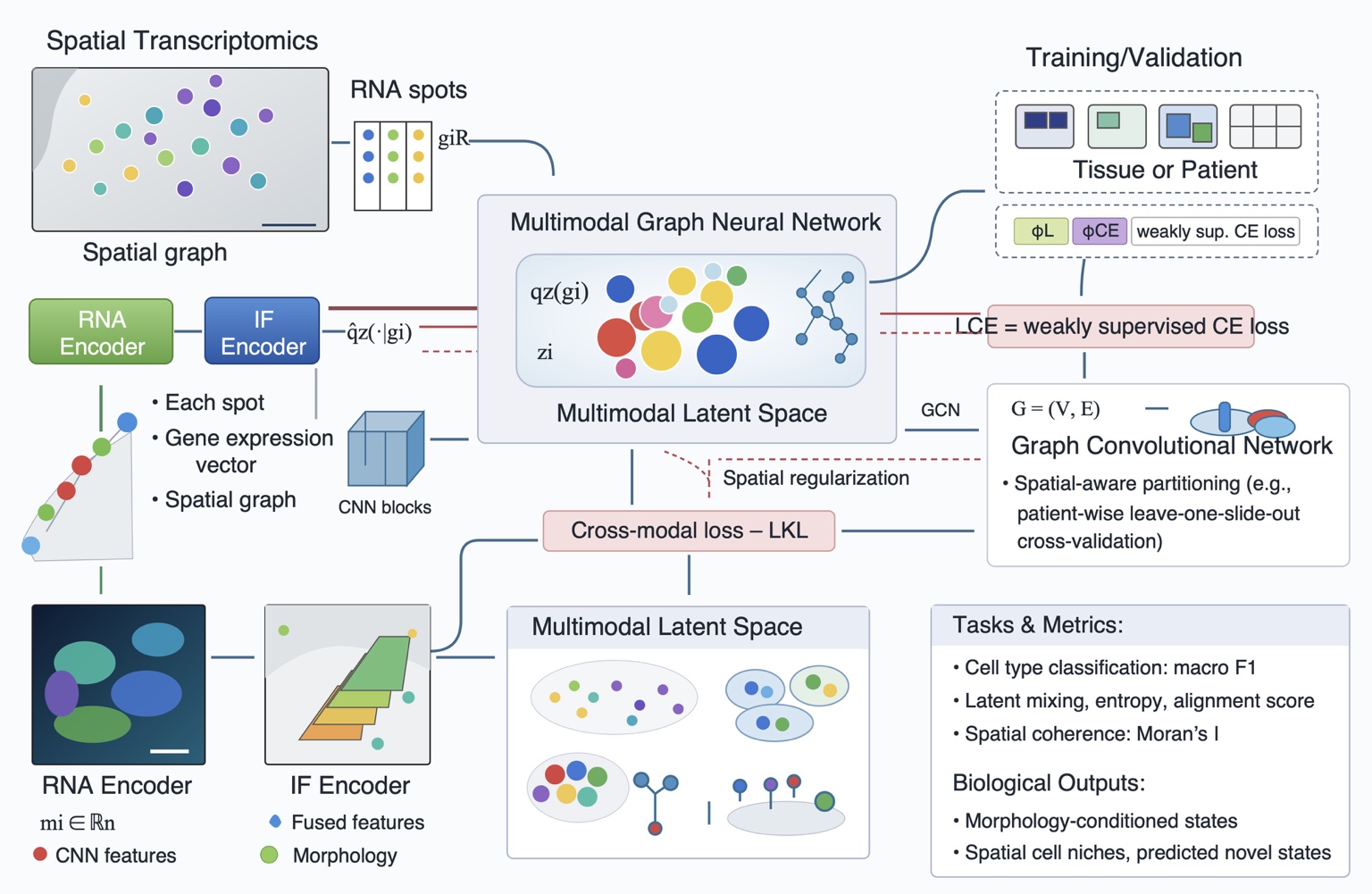
We integrate spatial gene expression with morphology features from paired immunofluorescence images. RNA and image encoders map both modalities into a shared latent space, which a graph neural network refines using information from neighboring tissue spots. Weakly supervised cell-type learning, cross-modal alignment and spatial regularization guide training; patient-wise leave-one-slide-out validation tests generalization. The resulting maps reveal morphology-conditioned cell states, spatial niches and candidate novel states.

Spatial transcriptomicsImaging AIGraph neural networksMultimodal learning
Multimodal graph-learning framework integrating spatial transcriptomics, immunofluorescence imaging and tissue-neighborhood information to resolve spatial cell states
Figure 5. Multimodal graph-learning framework integrating spatial transcriptomics, immunofluorescence imaging and tissue-neighborhood information to resolve spatial cell states.
OUR TOOLKIT — 03

Methods built for
biological complexity.

We combine experimental data, computational modelling and biological interpretation — with reproducibility and generalization built into the process.

01
▦

Measure

Single-cell RNA-seq, scATAC-seq, RNA+ATAC Multiome, targeted single-cell assays and clinical molecular data.

→
02
⌘

Integrate

Multimodal data integration, cell-state analysis, regulatory inference and donor-aware representations.

→
03
⟡

Model

Deep learning, domain-adversarial learning, transfer learning, nested validation and predictive modelling.

→
04
◎

Discover

Mechanisms, molecular endotypes, biomarkers and experimentally testable therapeutic hypotheses.

OUR PRINCIPLESDonor-aware ✳ Reproducible ✳ Interpretable ✳ Translatable
A SIGNATURE CHALLENGE — 04

AI that learns
the disease,
not the dataset.

In heterogeneous biomedical data, models can learn cohort identity or technical artefacts instead of disease biology. Our work uses donor-aware modelling and nested leave-one-dataset-out validation to test whether molecular patterns transfer to independent cohorts.

That is the difference between a model that performs well on familiar data and one that may help reveal robust biology in new patients.

Explore our work ↗
MODEL GENERALIZATION ● FRAMEWORK
DISEASE-RELEVANTLATENT
REPRESENTATION
DOMAIN-INVARIANT FEATURES
TRAIN → HOLD-OUT DONOR → INDEPENDENT COHORT
CONCEPTUAL SCHEMATIC · NOT EXPERIMENTAL DATA
2026 PUBLICATIONS — 05

Recent work
in the literature.

Selected 2026 publications featuring contributions from the Mulaw Lab across cancer biology, stem-cell ageing and AI-enabled imaging.

AI · LIVE-CELL IMAGING · DEEP LEARNING

A deep learning approach to assess transendothelial cell trafficking performance.

Schumacher TM, Gottloeber EM, Koziel E, et al., including Mulaw MA. Scientific Reports 16, 11602 (2026).

Introduces a Keras/TensorFlow-based deep-learning approach for automated classification of cell-transmigration phases in flow-based adhesion assays, supporting standardized and scalable live-cell imaging analysis.

Read publication ↗
↗
STEM-CELL AGEING · HEMATOPOIESIS

Elevated levels of Ube2g1 in hematopoietic stem cells lead to segmental aging of the hematopoietic system.

Niemann J, Schuster T, Sakk V, et al., including Mulaw MA. Haematologica 111(9), 2990–3003 (2026).

Identifies UBE2G1 as a regulator of age-associated HSC dysfunction, linking altered proteostasis and SHP2-associated phosphorylation to lineage skewing and impaired stem-cell function.

Read publication ↗
↗
LAB NEWS — 06

Milestones &
developments in 2026.

Selected publications, research funding, collaborative awards and scientific engagement marking an active year for the Mulaw Lab.

Org-BOOST graduate research programme launched

The DFG-funded RTG 3175/1 Org-BOOST programme (Organoid-Based Modelling of Solid Tumors) brings together interdisciplinary research on tumour progression and clonal evolution. The Mulaw Lab contributes computational biology and AI/ML expertise.

DFG · RTG 3175/1

Longitude Prize on ALS — first-phase award

The lab contributes a pivotal computational workstream to the international Target ALS collaboration coordinated by TUM, with partners at Ulm University and the University of Melbourne, supported through Challenge Works by Nesta.

Target ALS · Challenge Works by Nesta

DFG Collaborative Research Centre “Aging at Interfaces” enters its next funding period

Continued participation in SFB 1506 supports the lab’s research on stem-cell ageing, rejuvenation and the interactions between cellular systems and their microenvironments.

DFG · SFB 1506

New study links UBE2G1 to segmental ageing of hematopoiesis

Published in Haematologica, the study identifies a molecular link between proteostasis, signalling and age-associated changes in hematopoietic stem-cell function.

Read the paper ↗

AI-based live-cell imaging for transendothelial cell trafficking

A collaborative study in Scientific Reports demonstrates deep-learning classification of cell-transmigration phases, supporting scalable and standardized analysis.

Read the paper ↗

Invited contribution to the Illumina–Boehringer Ingelheim Genomics Symposium

Sharing advances in computational single-cell genomics and AI/ML for biomedical research with the genomics and translational research community.

Invited scientific presentation

Machine learning reveals early tumour–microenvironment interactions

The Allgöwer et al. study in Molecular Cancer features a machine-learning model developed by the Mulaw Lab to investigate KRAS-driven niche preparation before pancreatic cancer onset.

Read the paper ↗

News highlights are selected 2026 milestones; dates are shown at year level where a specific event date was not provided.

RESEARCH SUPPORT — 07

Supported by
research partners.

Our research is enabled by competitive funding programmes and collaborative partnerships supporting discovery in ageing, cancer, stem-cell biology and neurodegeneration.

Funding agencies, research programmes and collaborative initiatives
LAB LEADERSHIP — 08
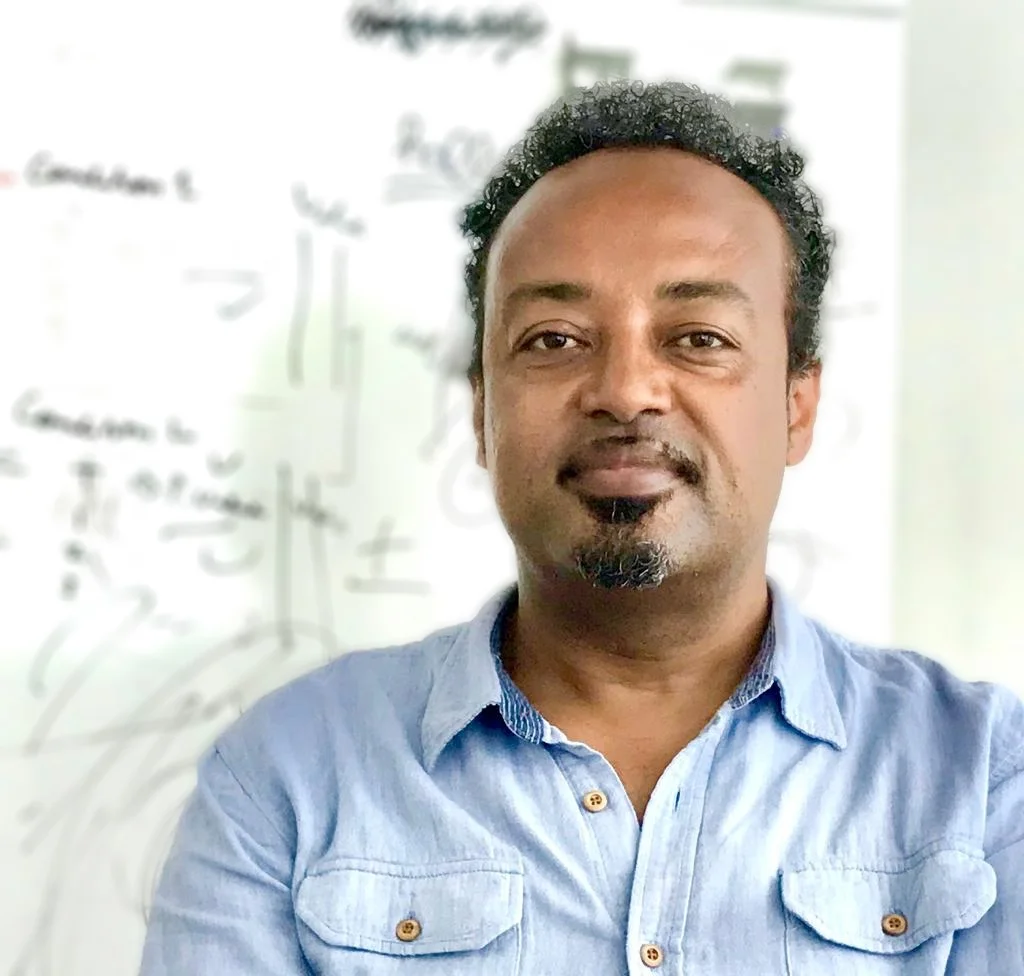
Prof. Medhanie A. Mulaw
PROF. MEDHANIE A. MULAW
PRINCIPAL INVESTIGATOR

Medhanie A. Mulaw

Head, Unit for Single-Cell Genomics · Medical Faculty, Ulm University

Prof. Medhanie A. Mulaw is a computational genomics researcher working at the interface of single-cell biology, multi-omics, machine learning and translational biomedical research. He leads the Unit for Single-Cell Genomics at Ulm University, building analytical capability and collaborative research programmes that connect high-dimensional molecular data with questions in haematology, ageing, leukemia, neurodegeneration and cancer.

His academic background spans a PhD in Human Biology from Ludwig-Maximilians-Universität Munich, an MSc in Genetics from Addis Ababa University and a BSc in Plant Sciences from the University of Asmara. His work combines methodological innovation with interdisciplinary project leadership, research infrastructure and graduate training.

CURRENT TEAM

The people behind the science.

No.NamePosition
01Miltiadis TsesmelisPostdoctoral Researcher
02Yun ChenPostdoctoral Researcher
03Marius MhysokPhD Student
04Klemens KapitzaPhD Student
05Alina SchlegelMSc Student
06Karina EiwenBiological Technical Assistant (BTA)
07Yejin JangStudent Assistant (HiWi)
INSTITUTIONAL ADDRESSUnit for Single-cell Genomics, Ulm University, Meyerhofstr. N27, 89081, Ulm, GermanyGoogle Maps location pinGoogle Maps ↗Ulm University ↗
TRAINING & COMMUNITY — 09

Growing the next generation
of computational scientists.

We value rigorous, reproducible and collaborative research. Our teaching and mentoring connect biological questions with quantitative reasoning, hands-on computational analysis and responsible use of AI.

At Ulm University, Prof. Mulaw has established biostatistics and advanced R/Bioconductor training through the IGradU graduate programme, contributed to teaching in Molecular Medicine and Translational Neuroscience, and designed a computational biology and bioinformatics module for Org-BOOST.

Research and training enquiries ↗
CONNECT WITH US — 10

Let's make the
next discovery
together.

For research collaborations, computational genomics, multi-omics analysis and academic enquiries, get in touch.

PRINCIPAL INVESTIGATOR

Prof. Medhanie A. Mulaw


INSTITUTION

Unit for Single-cell Genomics
Ulm University
Meyerhofstr. N27
89081, Ulm, Germany

Open the Unit for Single-cell Genomics location in Google Maps